
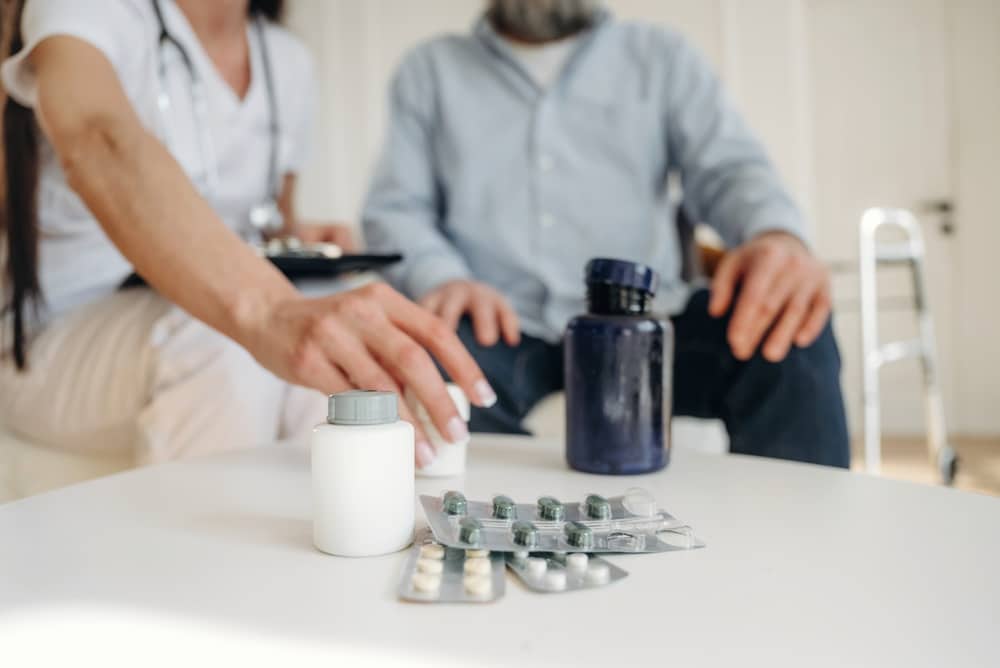
Debunking MAT Myths: How Suboxone and Vivitrol Support Long-Term Sobriety

If you or a loved one have ever explored options for addiction recovery, you have likely encountered Medication-Assisted Treatment (MAT), also referred to as Medications for Opioid Use Disorder (MOUD). Unfortunately, you may have also come across outdated stigma or persistent myths claiming that using medication in addiction recovery is somehow “cheating” or isn’t “real” sobriety.
It is time to set the record straight with empathy, rigorous science, and genuine hope.
Decades of peer-reviewed medical research consistently demonstrate that MAT reduces fatal overdose rates by over 50%, dramatically increases long-term treatment retention, and helps millions of individuals regain stability and health. At Wellbridge, our MAT program in Long Island is never viewed as a compromise; it is celebrated as a proven, life-saving medical tool.
When paired with trauma-informed care and individual therapy, medications like Suboxone and Vivitrol provide the physiological foundation required for true, lasting recovery.
Clearing Up MAT Myths with Science and Compassion
Myth 1: “You’re just trading one addiction for another.”
- The Science: Addiction is a chronic, relapsing brain disease characterized by uncontrollable cravings, compulsive drug seeking, loss of function, and severe negative life consequences. Physical dependence, by contrast, is a natural biological adaptation to a daily maintenance medication; the exact same way a body adapts to daily blood pressure medication or thyroid treatment.
- The Reality: When taken as prescribed under expert medical supervision, medications like Suboxone (buprenorphine/naloxone) or Vivitrol (extended-release naltrexone) do not produce euphoria or cause erratic behavior. Instead, they gently stabilize brain chemistry, satisfy or block opioid receptors, and eliminate physical sickness and severe cravings. By eliminating constant biological distress, MAT allows individuals to return to work, rebuild family relationships, engage deeply in therapy, and thrive. That isn’t addiction; that is medical recovery in action.
Myth 2: “Taking medication means you aren’t truly sober.”
- The Science: Genuine recovery is defined by improved quality of life, restored physical health, emotional stability, and the freedom to pursue your goals. Sobriety is not meant to be a test of how much physical suffering a person can endure through raw willpower.
- The Reality: Modern medicine understands substance use disorder as a chronic medical condition. Criticizing someone for using Vivitrol or Suboxone to stay healthy is equivalent to telling someone with diabetes that they aren’t truly healthy because they manage their condition with insulin. Medical support is a sign of wisdom, not a personal shortcoming.
Myth 3: “MAT is only supposed to be used short-term during detox.”
- The Science: Studies show that abruptly discontinuing MAT after a brief detox leads to relapse rates exceeding 80%. Chronic substance use alters brain pathways over extended periods, and those neural circuits require months—or sometimes years—of steady biological stability to heal.
- The Reality: Major health organizations, including the American Society of Addiction Medicine (ASAM), endorse maintaining MAT for as long as it continues to benefit the patient’s stability and overall well-being.
How Suboxone and Vivitrol Work in the Brain
Every individual’s recovery journey is unique, which is why Wellbridge provides personalized medical evaluations to match you with the right support:
Suboxone (Buprenorphine / Naloxone)
- Brain Interaction: A partial opioid agonist that occupies opioid receptors just enough to eliminate withdrawal symptoms and cravings, featuring a built-in “ceiling effect” that prevents intoxication.
- Daily Experience: You wake up feeling physically balanced, mentally clear, and free from the constant distress of cravings, fully ready to engage in your day.
Vivitrol (Extended-Release Naltrexone)
- Brain Interaction: A non-addictive full opioid antagonist administered as a monthly injection. It completely blocks opioid receptors and significantly reduces alcohol cravings.
- Daily Experience: Provides a reliable 30-day “safety net” where opioids and alcohol cannot produce intoxicating effects, effectively breaking the brain’s reward feedback loop.
The Vital Connection: MAT and Trauma-Informed Care at Wellbridge
One of the most profound reasons Wellbridge integrates MAT treatment programs with trauma-informed care comes down to how human nervous systems process safety and stress.
A vast majority of individuals suffering from addiction have experienced significant trauma whether during childhood, within adult relationships, or through the dangerous realities of living with an active addiction. Trauma alters the nervous system, locking it into a persistent state of fight, flight, or freeze.
Why We Must Stabilize the Body First
When an individual is actively experiencing severe physical cravings or intense withdrawal, the brain interprets that physical panic as an immediate threat to survival. In that hyper-alert state, the prefrontal cortex, the region responsible for high-level reflection, emotional regulation, and learning, essentially goes offline:
- It is nearly impossible to sit comfortably in a therapy session, discuss painful life experiences, or absorb new emotional coping mechanisms when your body is experiencing biological panic.
- Expecting a patient to engage in deep, transformative psychological work while fighting intense physical cravings places an unfair and unrealistic burden on an already overwhelmed nervous system.
How MAT Opens the Door to Deep Healing
This is where Medication-Assisted Treatment functions as a powerful tool for compassionate healing:
- Restoring Physiological Safety: Suboxone or Vivitrol calms the nervous system’s alarm network, sending a clear biological signal to the body that it is safe.
- Re-engaging the Thinking Brain: Once physical cravings and withdrawal are relieved, cognitive clarity returns. Patients can think clearly, focus, and actively participate in therapy.
- Facilitating Safe Trauma Resolution: With a stable neurochemical foundation established by MAT, our clinical therapists can safely guide patients through gentle, evidence-based trauma modalities, such as EMDR, somatic experiencing, or trauma-focused CBT, without triggering a physiological reflex to seek substances for relief.
At Wellbridge, we believe in utilizing every effective medical, scientific, and therapeutic tool available to support your journey. MAT is not a crutch; it is a strong, proven bridge leading to the healthy, meaningful, and joyful life you deserve. Contact us today!