
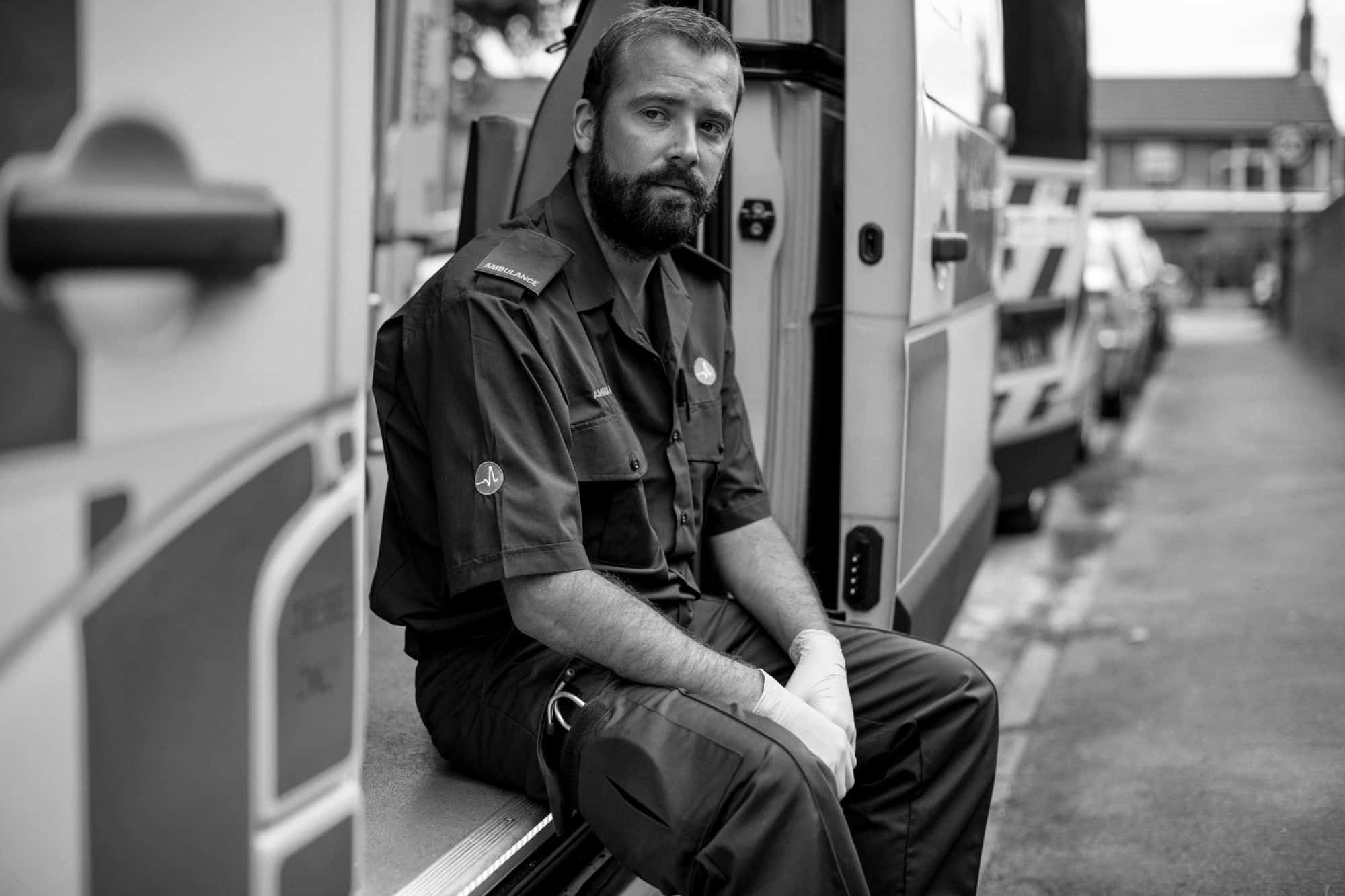
Behind the Badge: Addressing PTSD, Alcoholism, and Occupational Trauma in First Responders

Police officers, firefighters, paramedics and dispatchers absorb more critical incidents in a single year than most people encounter in a lifetime, and the cumulative weight of that exposure shows up as insomnia, irritability, emotional numbness and heavy drinking long before anyone uses the word diagnosis.
Effective PTSD therapy for this population has to account for that repetition, not treat a career as if it were one bad call. At Wellbridge, our clinical teams treat post-traumatic stress and alcohol dependence together because first responders almost always arrive for both PTSD and addiction treatment.
Why Occupational Trauma Looks Different Behind the Badge
Most trauma models were built around a single event: an assault, a crash, a disaster. Occupational trauma for first responders is different because the exposure is repeated, expected and part of the job description, which makes it harder to name as harm.
The Substance Abuse and Mental Health Services Administration has reported that roughly 30% of first responders develop behavioral health conditions such as depression and PTSD, compared with about 20% of the general population.
Several patterns drive that gap:
- Cumulative exposure: a paramedic in a busy urban system may run 2,000 to 3,000 calls a year, with dozens involving death or serious injury.
- Shift disruption: 24-hour tours and rotating nights suppress REM sleep, which is when the brain does much of its emotional processing.
- Moral injury: outcomes that violate a person’s sense of right and wrong, such as a pediatric arrest or a use-of-force incident, often hurt longer than fear-based memories.
- Hypervigilance as a job skill: the scanning that keeps you alive on duty does not switch off in the driveway at 0700.
- Culture: the expectation that you handle it, debrief with dark humor, and take the next call.
Recognizing the Warning Signs Early
Post-traumatic stress rarely announces itself. It tends to arrive as small changes that a spouse notices months before the responder does, and by then drinking has usually become part of the routine.
- Sleeping fewer than five hours on most nights, or needing alcohol to fall asleep after a shift
- Intrusive images or smells from specific calls, often triggered by an address, a song or a scanner tone
- Avoiding certain districts, patient types or family conversations about work
- Anger that flares over trivial things at home but never on scene
- Emotional flatness, described by many patients as “watching my own life from the passenger seat”
- Rising tolerance: four or five drinks doing what two used to do
Alcohol as the Unofficial Decompression Protocol
Choir practice after a bad shift, a cooler in the apparatus bay parking lot, three fingers of whiskey before bed: alcohol is embedded in first responder culture partly because it works, briefly. It blunts hyperarousal, shortens sleep latency and quiets intrusive memory, then rebounds hours later with fragmented sleep and higher anxiety.
Research on career firefighters has repeatedly found binge drinking rates near 50% among men, well above civilian norms. What starts as a coping tool becomes a physiological dependence that deepens the underlying PTSD, which is why standalone alcohol addiction treatment without trauma work has such high relapse rates in this group.
The Barriers That Keep Responders Out of Treatment
Clinically, the treatments work. The obstacles are usually practical and cultural, and they deserve direct answers rather than reassurance.
- Fear of fitness-for-duty consequences: many responders assume any disclosure ends a career, when most agencies have return-to-work pathways after documented treatment.
- Confidentiality doubts: federal privacy rules under HIPAA and 42 CFR Part 2 give substance use records unusually strong protection.
- Scheduling: Kelly shifts and mandatory overtime make weekly 9 a.m. appointments unrealistic.
- Clinician mismatch: a therapist who flinches at scene detail loses credibility in the first session.
- Identity: the person trained to be the help has no script for asking for it.
What Evidence-Based Trauma Therapy Actually Involves
Modern trauma therapy is structured and time-limited, not open-ended talking. Most protocols run 8 to 16 sessions and produce measurable symptom reduction on standardized scales such as the PCL-5, which we re-administer throughout care so progress is visible rather than assumed.
- Cognitive Processing Therapy (CPT): 12 sessions targeting the stuck beliefs that follow bad outcomes, such as “I should have gotten there faster.”
- Prolonged Exposure (PE): gradual, controlled revisiting of avoided memories and situations until they lose their charge, typically 8 to 15 sessions.
- EMDR: bilateral stimulation paired with memory recall, often useful for single-incident images that dominate a caseload of otherwise manageable calls.
- Skills groups: sleep retraining, anger regulation and distress tolerance, which matter enormously when hypervigilance has been rewarded professionally for 15 years.
Treating Alcohol Dependence and PTSD at the Same Time
Sequential treatment, sober first and trauma later, tends to fail because the drinking was doing a job. Integrated care addresses both tracks concurrently under one clinical team.
That usually begins with medically supervised withdrawal management when physical dependence is present, since untreated alcohol withdrawal can escalate to seizures within 48 hours. From there, treatment may include FDA-approved medications such as naltrexone or acamprosate to reduce craving, alongside trauma-focused sessions two or three times weekly.
Wellbridge builds every individualized plan on a science-backed clinical framework, with close collaboration between our researchers and treating clinicians so that new findings in addiction science reach patients quickly. That structure lets us address an extensive range of alcohol, substance use and co-occurring mental health disorders, including the depression, chronic pain and sleep disorders that frequently travel with occupational trauma.
How Families and Crews Can Help
Peers notice first. A useful intervention is specific and private: name two behaviors you have observed, say when you noticed them, and offer one concrete next step such as a confidential assessment call.
- Avoid ultimatums delivered in front of the crew, which trigger defensiveness
- Learn your agency’s employee assistance and peer support options before you need them
- For families, keep firearms and medications secured during acute crisis periods
- Know that most treatment episodes involve 30 to 90 days of structured care, not an indefinite absence
Talk to Wellbridge About Your Next Shift, and the Ones After It
If the drinking has become the only thing that turns the volume down, an assessment with our clinical team is a private, no-obligation conversation about what treatment would actually look like for your schedule and your department. Contact Wellbridge to speak with an admissions clinician and begin an individualized plan.